
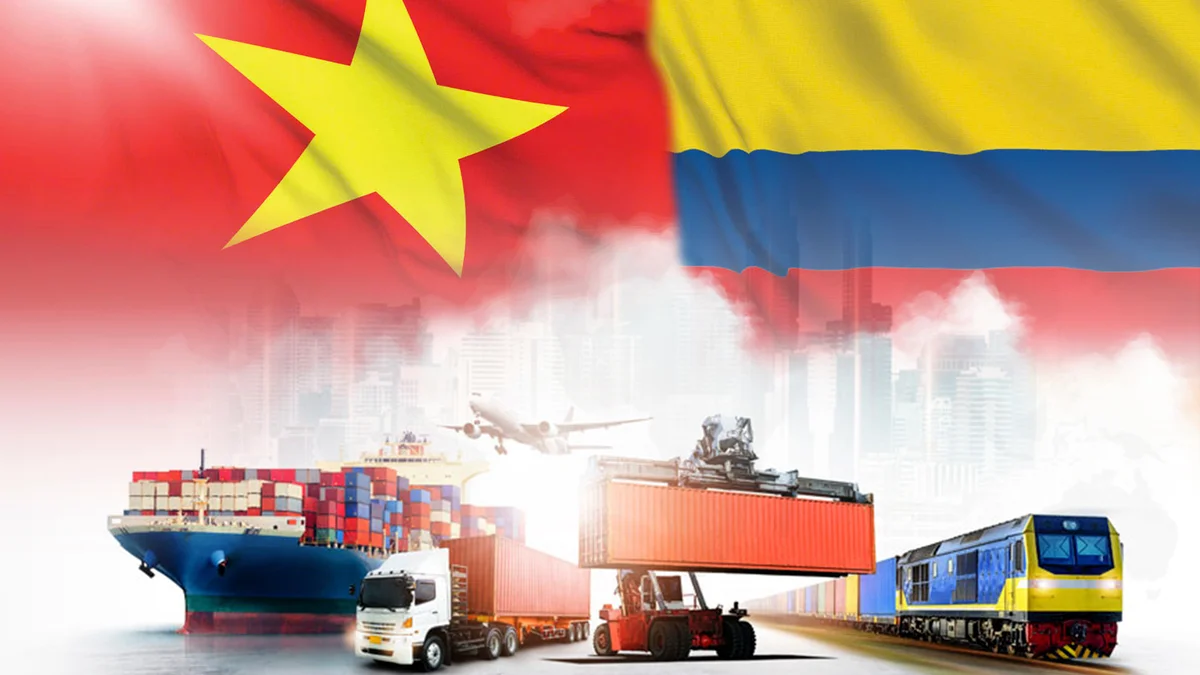
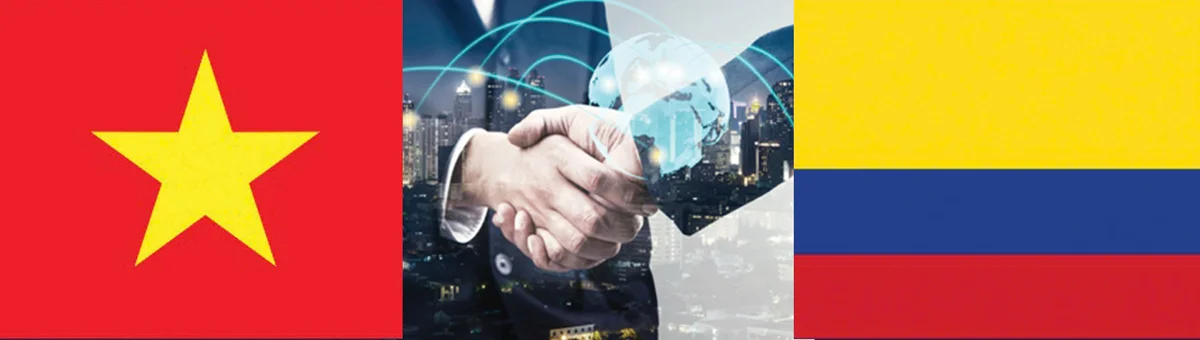
Similar aspirations for development and shared interests in economics, trade, and culture are opening up opportunities for the two countries to elevate their relations, aiming toward a sustainable and effective cooperation corridor.
OVERVIEW OF THE REPUBLIC OF COLOMBIA
Colombia, officially known as the Republic of Colombia, is located in the northernmost part of South America. It borders Venezuela and Brazil to the east, Peru and Ecuador to the south, Panama to the northwest, the Caribbean Sea to the north and the Pacific Ocean to the west. This unique geographical location enables Colombia to serve as a strategic bridge between Central and South America, while also providing vital gateways to both the Pacific and Atlantic Oceans. With a vast territory, Colombia is the fourth-largest country in South America and is ranked among the most biodiverse nations in the world.
Colombian culture is a vibrant fusion of indigenous heritage, Spanish influence, and African elements, creating a rich and dynamic national identity. Music, festivals, and literature, among them the works of Nobel laureate Gabriel García Márquez, have played an important role in promoting Colombia’s image internationally. With its geo-strategic advantages, a diverse economy, and an active role in multilateral institutions such as the United Nations, WTO, OECD, OAS, the Pacific Alliance, and the Andean Community, Colombia is steadily reinforcing its position as a key partner, not only within Latin America but also on the global stage.
HISTORICAL BACKGROUND AND DIPLOMATIC FOUNDATIONS OF VIETNAM - COLOMBIA RELATIONS
Despite being half a world apart, Vietnam a dynamic, deeply integrated nation in Southeast Asia and the Republic of Colombia, a gateway with vast potential in the northern tip of South America, are connected by shared values: the pursuit of peace, the spirit of independence, and a commitment to sustainable development. Over more than four decades since the establishment of diplomatic relations in 1979, the two countries have nurtured a stable and trustworthy friendship, gradually expanding cooperation across political-diplomatic, economic-trade, scientific, educational, and cultural fields.
In recent years, this relationship has been elevated through a series of meaningful and substantive cooperation milestones. The signing of a Memorandum of Understanding on trade, investment, and industrial cooperation, along with the first session of the Vietnam-Colombia Joint Economic Committee held in Bogotá (September 2023), has opened a new corridor for bilateral cooperation, particularly in economics and trade. In November 2024, a delegation from Colombia’s AGROSAVIA conducted a working visit to Vietnam, creating a breakthrough in agricultural cooperation, especially in rice and cashew cultivation. Later, on the sidelines of the P4G Summit in Hanoi (April 2025), high-level engagements reaffirmed both nations’ commitment to promoting green transformation, innovation, and climate change response.
These events not only highlight the strong friendship between Vietnam and Colombia but also reflect a shared strategic vision: to elevate bilateral relations beyond traditional diplomacy, moving toward comprehensive cooperation and joint contributions to the peace, stability, and prosperity of both the ASEAN and Latin American regions.

Political and Diplomatic Cooperation
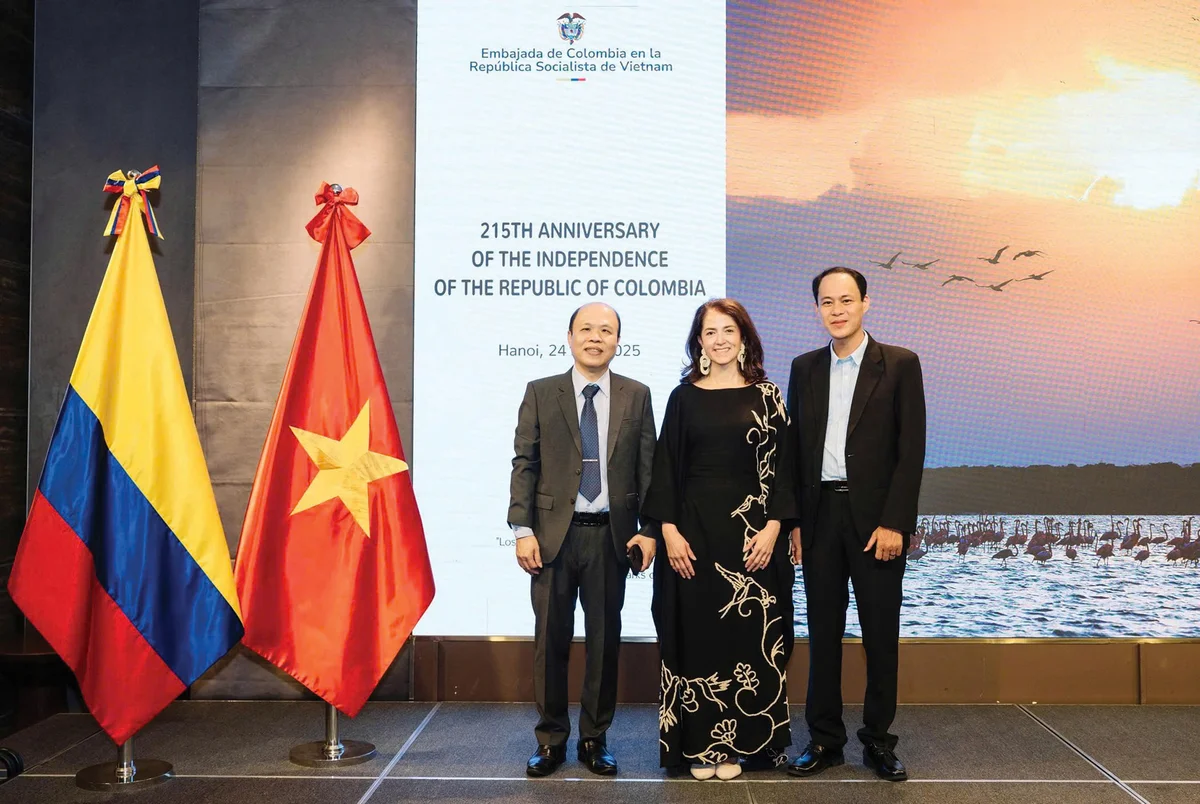
In recent years, alongside regular visits and political consultations, cultural diplomacy activities have contributed to deepening bilateral relations. Most recently, in Hanoi, the Embassy of Colombia in Vietnam solemnly celebrated the 215th anniversary of the Independence of the Republic of Colombia (1810–2025). Speaking at the event, Colombian Ambassador, Ms. Camila María Polo Flórez, emphasized the importance of diversity and building a cohesive society that thrives in harmony through differences, while honoring the defining qualities of the Colombian people: rich cultural identity, creativity, friendliness, and generosity.
Ambassador Polo Flórez also reaffirmed the fundamental principles of Colombia’s foreign policy: support for multilateralism, dialogue and cooperation, the protection of democracy, human rights, and national sovereignty, as well as collective action to tackle global challenges from economic and environmental crises to conflict and war. In this spirit, the Ambassador highlighted that Vietnam is not only an important partner in Asia but also a friend who shares Colombia’s commitment to achieving Sustainable Development Goals, mutual respect, and long-standing aspirations for peace.
The political and diplomatic relationship between Vietnam and Colombia is founded on mutual trust, respect, and shared values of peace, justice, and sustainable development. The two countries have maintained regular dialogue and political consultation mechanisms between their respective Ministries of Foreign Affairs, through which they engage in open and frank discussions on bilateral issues and global challenges. Vietnam and Colombia also frequently coordinate positions at the United Nations, supporting each other’s candidacies to UN bodies such as the Human Rights Council and the International Law Commission, and actively exchange information through other multilateral forums in which both participate.
Additionally, on the issue of climate change, both countries are members of the United Nations Framework Convention on Climate Change (UNFCCC) and have committed to implementing the Paris Agreement. Colombia highly appreciates Vietnam’s initiatives on green growth and net-zero emissions by 2050, seeing them as a solid foundation for cooperation in tropical forest conservation and water resource management fields where both countries hold comparative advantages. In parallel, people-to-people diplomacy and cultural diplomacy have also been enhanced through parliamentary exchanges, partnerships between friendship associations, and cultural activities such as art programs, photo exhibitions… Helping to foster deeper mutual understanding and connections between the peoples of both countries.
Economic – Trade – Investment Cooperation
Economic and trade cooperation is regarded as a key pillar of the bilateral relationship. Two-way trade has witnessed positive growth, increasing from less than USD 300 million in 2015 to nearly USD 800 million in 2023, despite global trade fluctuations. Vietnam exports products such as phones and components, footwear, textiles, and processed agricultural goods to Colombia, while importing coal, coffee, cotton, and certain chemical products.
A notable milestone was the signing of the Memorandum of Understanding on Trade Cooperation on September 27, 2023, in Bogotá between Vietnam’s Ministry of Industry and Trade and Colombia’s Ministry of Commerce, Industry and Tourism. This document lays the groundwork for expanding cooperation in promising sectors such as agricultural products (rice, seafood, tropical fruits), textiles (linking the fiber–fabric–garment supply chain), renewable energy (especially wind and solar power), and logistics (leveraging Colombia’s Caribbean and Pacific ports to access Latin American and North American markets).
In terms of geographic advantage, Vietnam lies at the heart of Southeast Asia, serving as a gateway to the ASEAN market of over 650 million people. Meanwhile, Colombia, as the fourth-largest economy in Latin America and a member of the Pacific Alliance, holds a strategic position connecting both the Atlantic and Pacific Oceans. This complementarity enables the two countries to support each other in global supply chains, expand export networks, and reduce dependence on traditional markets.
cultural, Educational, and Scientific-Technological Cooperation
Cultural exchange activities between Vietnam and Colombia have become increasingly diverse and vibrant. Vietnam has organized events such as the Vietnamese Film and Cuisine Week in Bogotá, showcasing traditional dishes like pho, nem (spring rolls), and banh mi, along with Vietnamese cinema. In return, Vietnamese audiences have enjoyed the Colombian Film Festival, which featured award-winning films and traditional music performances such as cumbia and vallenato.
In the field of education, the two countries have launched scholarship exchange programs for students, researchers, and young professionals. Several Vietnamese universities such as Hanoi University and the Foreign Trade University have signed cooperation agreements on training and research with Colombian institutions. In addition, Vietnam and Colombia hold significant potential for scientific research collaboration and technology transfer, particularly in high-tech agriculture (drought-resistant crop varieties, coffee processing technologies), healthcare (endoscopic surgery techniques, telemedicine), and renewable energy.
Prospects and Future Orientation
Amid shifting global supply chains and a growing trend of inter-regional connectivity, Vietnam and Colombia are facing strategic opportunities to elevate their bilateral cooperation to new heights. Beyond the scope of bilateral ties, the potential for cooperation also extends into the multilateral arena especially within ASEAN and the Pacific Alliance, two of the most dynamic regional economic mechanisms today.
One key direction is to upgrade the political-economic dialogue mechanism to a higher level, creating a regular channel of communication between leaders and technical agencies of the two countries. On this basis, both sides could accelerate negotiations and sign preferential trade agreements, thereby reducing tariffs, simplifying customs procedures, and creating a favorable legal corridor for businesses. In fact, Vietnam’s signing of the EVFTA with the European Union and the CPTPP with several Latin American countries has significantly boosted trade. A similar agreement with Colombia could bring about equally positive effects.
Furthermore, the two countries could promote triangular cooperation with the involvement of international partners, particularly in highly sustainable areas such as renewable energy, circular economy, and food security. Colombia with its abundant potential in wind, solar, and hydro power when combined with Vietnam’s experience in clean energy development, can lead to model projects for green cooperation. In agriculture, Colombia could share techniques in growing world-renowned Arabica coffee, while Vietnam could contribute expertise in processing technology and market expansion in Asia.
Through these steps, Vietnam–Colombia relations hold the potential to become a model for comprehensive South–South cooperation, based on the principles of equality, respect for sovereignty, shared benefits, and mutual support in addressing common challenges such as climate change, economic downturns, and supply chain disruptions. This is not only a connection between two emerging economies but also a powerful message about the increasing role of Southern Hemisphere countries in shaping the global economic landscape.
By ngoc anh