

From manufacturing base to technology hub
After nearly four decades of opening its economy, the foreign-invested sector has become one of the main contributors to Vietnam's economic growth, exports and industrialisation. As of June 2026, the country had nearly 47,000 valid foreign-invested projects with total registered capital of nearly US$550 billion.
In 2025 alone, newly registered FDI reached US$38.42 billion, the second-highest annual figure since Vietnam began attracting foreign investment. Disbursed FDI totalled US$25.35 billion, up 7.2% from the previous year and the highest level on record. The figures reflect growing confidence among international investors in Vietnam's investment environment.
According to the Vietnam Association of Foreign Invested Enterprises (VAFIE) in its annual report on foreign investment in Vietnam, the nation could attract US$38-40 billion in FDI annually during 2026-2030. Notably, global investment is shifting rapidly towards high-tech industries such as artificial intelligence (AI), semiconductors, data centres, cloud computing, high-tech medical equipment, renewable energy and the digital economy.
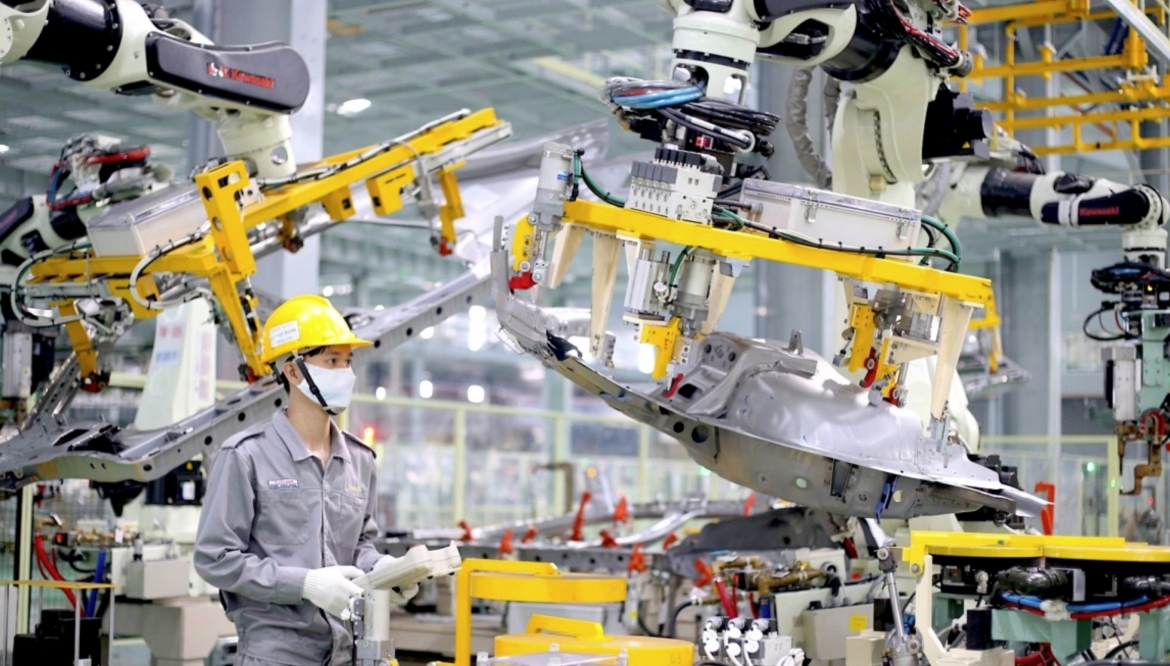
Despite the positive figures, several bottlenecks persist. Most FDI projects in Vietnam are still concentrated in processing and assembly, localisation rates in many industries remain low, and links between foreign-invested and domestic enterprises have yet to generate the expected spillover effects. Technology transfer, research and development (R&D), and the training of high-quality human resources have also progressed slowly.
In many localities, competition for investment still relies largely on incentives related to land and taxation, while technology, the efficient use of resources and energy, and contributions to the domestic business ecosystem have yet to become key criteria in investment decisions. Without changing this model, Vietnam risks remaining a manufacturing base rather than becoming a regional hub for technology and innovation in global value chains.
Addressing a national conference on implementing Resolution No. 10, Party General Secretary To Lam stressed that the development of the foreign-invested sector must go hand in hand with strengthening the economy's strategic self-reliance, production capacity, technological capability and competitiveness.
That direction was set out in Resolution No. 10, issued by the Politburo on June 8, 2026, on developing the foreign-invested sector. The resolution targets US$200-300 billion in newly registered FDI by 2030, with 75% of new investment expected to come from developed economies with strengths in technology, capital and modern governance. It also aims for around 10,000 Vietnamese enterprises to join FDI supply chains, while localisation rates in key industries are expected to reach 40-50%.
The targets show that Vietnam is moving towards a new stage of development in which FDI will not only provide capital but also foster innovation, strengthen domestic enterprises and enable the economy to move further into higher value-added segments of global value chains.
Solidifying foundations for high-quality FDI
In the global competition for investment, tax incentives and low labour costs are no longer decisive advantages. Technology companies are paying increasing attention to the quality of the workforce, research and development (R&D) capacity, digital infrastructure and innovation ecosystems. To attract a new generation of FDI, Vietnam needs to strengthen the foundations needed to support the operations of the world's leading technology companies.
Two decades ago, an abundant workforce and competitive labour costs made Vietnam an attractive destination for labour-intensive industries. Today, however, investors are looking for much more. They are seeking engineers, specialists, scientists and management professionals capable of participating in research, product design and product development.
Vu Dai Thang, Chairman of the Hanoi People's Committee, said that when selecting investment locations, technology investors place greater importance on access to a highly skilled workforce, a strong R&D environment, and close links between businesses, universities and research institutes than on traditional investment incentives.
That is also why Hanoi has identified the development of high-quality human resources as its core competitive advantage in attracting a new generation of FDI. The city plans to expand demand-driven training programmes, develop an innovation ecosystem based on an open-network model, and work towards becoming a regional hub for talent, technology and innovation.
According to Minister of Science and Technology Vu Hai Quan, traditional growth drivers such as low-cost labour and natural resource exploitation are gradually reaching their limits, while the world is entering a new phase of competition centred on science, technology, innovation and talent.
"The competitive advantage of the future will no longer lie in natural resources or low-skilled labour, but in the creative capacity of people," Quan said.
According to the minister, Vietnam needs to pursue three strategic shifts: from technology adoption to technology mastery in areas such as artificial intelligence (AI), semiconductors, clean energy and new materials; from resource-driven growth to innovation-driven growth; and from a low-cost advantage to a technology-based advantage in order to gradually strengthen its position in global value chains.
In addition to human resources, many experts believe Vietnam needs to invest more heavily in research infrastructure and innovation.
Nguyen Dinh Duc, former Chairman of the University Council of the University of Engineering and Technology under Vietnam National University, Hanoi, said investment in science and technology and higher education should be regarded as development investment rather than recurrent expenditure. The State should give priority to research universities, leading research institutes, data centres and strategic technology fields such as artificial intelligence (AI), semiconductors, biotechnology, robotics, new materials and clean energy.
In the race to attract a new generation of FDI, competitive advantage will no longer be determined by short-term incentives but by the strength of a country's innovation ecosystem. Countries with a highly skilled workforce, modern research infrastructure and a transparent policy environment will be better placed to attract high-value technology projects.
Creating stronger momentum for technology investment
While Resolution No. 10 sets out a vision of making Vietnam a destination for high-quality FDI, the question is how to turn that vision into reality.
Takimoto Koji, General Director of Mitsubishi Corporation Vietnam, stated that the decisive factors today are supply chain resilience, the quality of human resources, access to green energy and a stable policy environment.
He added that the attractiveness of an investment destination also depends on its ability to develop a network of capable supporting enterprises that can participate in supply chains. The Government should therefore expand programmes to help Vietnamese companies strengthen their governance, meet international standards, accelerate digital transformation and upgrade their technological capabilities.
From the business perspective, Nguyen Van Khoa, Chief Executive Officer of FPT Corporation, said Vietnam has an opportunity to move from a manufacturing centre to a regional innovation centre. Vietnam does not necessarily have to invent every new technology, but it can become a place where technologies are rapidly, effectively and widely applied to create globally competitive products.
To achieve that goal, Khoa proposed that the Government invest more heavily in shared infrastructure for the innovation ecosystem, including high-performance computing capacity, high-quality data, cloud computing, cybersecurity infrastructure and open laboratories, while enhancing links between businesses, universities and research institutes to promote the commercialisation of technology.
From an international perspective, Yasushi Masaki, Deputy Secretary-General of the OECD, emphasized that Vietnam should prioritise four areas to attract high-quality FDI linked to digital and green transitions: ensuring policy stability and consistency; modernising the legal framework in line with international standards; strengthening linkages between foreign-invested and domestic enterprises; and making investment promotion more proactive, selective and data-driven.
After nearly four decades of opening its economy to foreign investment, Vietnam now has an opportunity to move to a new stage of development. Resolution No. 10 provides an opportunity for the nation to evolve from a manufacturing base into a regional centre for innovation, research and technology development. In that process, FDI will bring modern production lines, knowledge, technology and higher value-added links in global supply chains.
Kim Ngoc