

To meet the demands of the times, Vietnam’s revolutionary press needs to renew its mindset, modernize its methods, and elevate its position in order to develop in a manner worthy of the nation’s stature. More importantly, it must become a trusted companion that inspires in every citizen the aspiration for a strong, prosperous, and thriving Vietnam.
The Press in the Context of the New Era
The most evident feature of the new era is the rapid rise of Artificial Intelligence (AI), Big Data, and social media, which have fundamentally transformed the way the public accesses information. Under these conditions, mainstream journalism is no longer competing only with one another but also with cross-border digital platforms.
This reality places urgent demands on the press to achieve “commensurate development.” Specifically, journalism must master technology and implement comprehensive digital transformation through data journalism, multimedia production, and personalized content delivery. It must also seek sustainable revenue models in order to reinvest in content quality and reduce excessive dependence on traditional advertising. At the same time, the press must avoid pursuing sensationalism and instead uphold professional ethics and the authenticity of information.
Moreover, journalism must carry the mission of “advancing together with the nation.” This means that the press must serve as a pioneering force in inspiring the public, spreading positive values, and fostering aspirations for a prosperous country. It must take the lead in countering false and distorted viewpoints, protecting national interests in cyberspace, and strengthening the nation’s soft power by promoting the image, culture, and people of Vietnam to the world, thereby enhancing the country’s international standing.
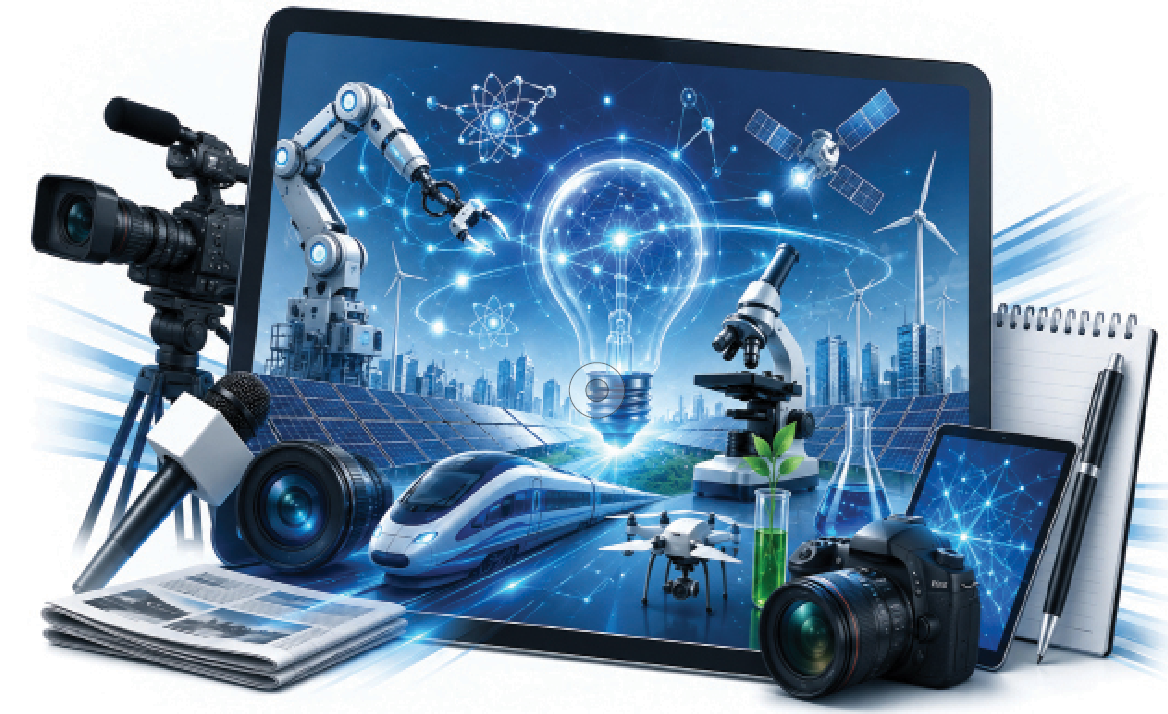
The Role of the Press in the New Era
In the new era - the “era of the nation’s rise”, journalism no longer merely performs the function of transmitting information; it has become a constructive force, a guide for public opinion, and a driving force for social development. The central roles of the press in the current period can be reflected in the following four aspects:
1. A Pioneering Force in Guiding Public Opinion: In the context of information explosion and the rise of AI, mainstream journalism serves as the “mainstream flow of information,” helping the public distinguish between truth and falsehood while shaping ethical values. To effectively lead public discourse, journalism must shift from a management-oriented mindset to a constructive and developmental one, creating space for the enrichment of national knowledge. At the same time, the press must proactively combat false, hostile, and distorted viewpoints in order to safeguard national interests and protect the political system.
2. A Bridge Connecting the Party, the State, and the People: The press is the most important channel for disseminating the major guidelines and policies of the Party and the State - such as the Resolution of the 14th National Party Congress to the people. It also serves as a forum for gathering public aspirations and concerns so that competent authorities can make timely policy adjustments. In addition, journalism performs the functions of supervision and social criticism, helping remove “bottlenecks” that hinder national development.
3. A Vanguard Force in Inspiring National Aspirations: The press plays the role of “bringing new vitality” by promoting patriotism and inspiring the aspiration to transform Vietnam into a developed nation by 2045. Alongside this mission, journalism should intensify the dissemination of positive values and exemplary role models in order to strengthen social consensus and public trust. It must also remain at the forefront of combating corruption, wastefulness, and moral degradation.
4. A Soft Infrastructure in the Era of Knowledge and Digitalization: Modern journalism is transforming itself into an essential form of soft infrastructure by applying technology to enhance public knowledge and intellectual capacity. Comprehensive digital transformation must be implemented through the development of “converged newsrooms,” multimedia journalism, and multi-platform communication models (text, audio, and video) in order to reach audiences anytime and anywhere.
In conclusion, the mission of journalism in the new era is to become “professional, humane, and modern,” truly integrating itself into the flow of the nation’s development so as to accompany the country toward new heights of progress and prosperity.
Journalism Developing in Proportion with and Advancing Together with the Nation
Journalism must develop in a manner commensurate with the nation’s progress and advance together with the people in the new era, becoming a constructive force that nurtures public trust and inspires aspirations for building a strong and prosperous country. According to current orientations, the press needs to renew its mindset and technological capabilities in order to accompany the Party, disseminate positive values, combat false and distorted viewpoints, and strengthen its role in guiding society in the new context.
The principal reasons why journalism must develop proportionately can be seen in several aspects. First, the press is regarded as a sharp ideological and political instrument serving the revolutionary cause, closely associated with the mission of helping the nation achieve breakthroughs in the era of national advancement. To become increasingly professional and modern, journalism must apply digital technologies and Artificial Intelligence (AI) to improve the quality of information, thereby meeting society’s growing demand for multidimensional and truthful information. In addition, the press plays a central role in disseminating the Party’s guidelines and the State’s policies, while fostering national pride, patriotism, and social responsibility. Furthermore, in the new era, journalism contributes to orienting public opinion, strengthening social supervision, and reinforcing the close relationship between the Party and the people.
The importance of journalism in the current stage is reflected through several key criteria: promoting positive and humane values; serving as a frontline force in the ideological sphere to combat false information and distorted narratives spread by hostile forces; and undertaking strong innovation through comprehensive digital transformation so as not to fall behind, while enhancing its position and influence in the context of the information explosion. Therefore, the advancement of journalism is not only an urgent requirement but also a historical responsibility in contributing to the building of a strong and prosperous Vietnam.

Core Values of Journalism in the New Era
For journalism to develop in a manner commensurate with the nation’s progress and truly “advance together with the nation” in the new era, it must focus on four core pillars:
1. Comprehensive Digital Transformation (The Foundation)
Journalism cannot remain outside the technological revolution. To “rise with the nation” means mastering technology in order to guide public opinion effectively. Specifically:
- Applying AI and Big Data: Artificial Intelligence should be utilized to optimize content production, personalize audience experiences, and analyze user trends.
- Multi-platform and Multimedia Development: Journalism can no longer rely solely on traditional written articles. It must establish a strong presence across digital platforms such as social media, podcasts, and short-form videos, employing modern and engaging forms of communication.
2. Preserving Integrity and Sharpness (Content Quality)
In a digital era overwhelmed by misinformation and fake news, the value of mainstream journalism lies in its credibility, reflected through the following criteria:
- Constructive and Solution-Oriented Journalism: Journalism should not merely report facts but also propose solutions, provide policy recommendations, and inspire aspirations for national development.
- Guiding and Orienting Public Opinion: Amid the “ocean” of chaotic information, journalism must serve as a filter and a lighthouse that guides public thought, protects the ideological foundation of the Party, and safeguards national interests.
3. Innovating the Economic Model of Journalism (Internal Strength)
To achieve autonomy and sustainable development, journalism must address financial challenges through:
- Diversifying Revenue Sources: Journalism should not depend solely on traditional advertising. Instead, it should develop new models such as paid content (paywalls), event organization, policy communication services, and digital service businesses based on media branding.
- State Commissioning Mechanisms: The State should strengthen its commissioning of journalism in communicating major policies, thereby providing media organizations with sufficient resources to fulfill their political and social responsibilities.
4. Building a Workforce that is Both Politically Committed and Professionally Competent (Human Resources)
Human resources remain the decisive factor, reflected primarily in two essential qualities:
- Strong Political Awareness and Integrity: Journalists must possess high political sensitivity in order to correctly identify and analyze issues in an increasingly complex global context.
- Integrated and Multifaceted Skills: Modern journalists must become “multiskilled professionals”, not only proficient in reporting and writing but also knowledgeable about technology and capable of effective interaction within digital environments.
Journalism that advances together with the nation must embody a press that is “Professional – Humane – Modern.” It should not merely reflect the spirit of the age but also become a driving force for social development, contributing to the realization of the goals of a prosperous people and a strong nation.
The core message today is that journalism cannot stand outside or lag behind the country’s development. To truly “rise,” every media organization and every journalist must renew their mindset, strengthen their professional courage, and harness the power of technology in order to serve the nation and the people more effectively.
“Advancing together with the nation” is not merely a slogan but an inherent mission of journalism in the new era. By mastering technology, upholding professional ethics, and continuously innovating content, journalism will continue to serve as a “leading banner” on the ideological and cultural front. When every journalist carries within themselves a strong sense of responsibility and national pride, journalism will undoubtedly continue to grow powerfully and make worthy contributions to Vietnam’s journey toward prosperity and glory, standing shoulder to shoulder with the great powers of the world in the not-too-distant future.
P.T.L