
According to the United Overseas Bank (UOB) Business Outlook Study 2026, 85% of Vietnamese businesses reported positive sentiment, a significant increase from 48% in 2025, when confidence was dampened by disruptions linked to US tariff developments.
The outlook remains upbeat. More than nine in 10 businesses expect improved performance in 2026, with stronger revenue growth anticipated over the following two years.
However, companies continue to face macroeconomic headwinds. Nearly half of respondents reported higher operating costs driven by tariffs and geopolitical risks, underscoring the need for greater efficiency, cost management and long-term business transformation.
Energy management emerges as a strategic priority
Beyond concerns over trade and geopolitics, energy management has emerged as a strategic priority for Vietnamese businesses.
The survey found that 96% of businesses in Vietnam consider energy management and efficiency important, compared with a regional average of 87%.
Against a backdrop of global energy market volatility and supply risks, companies are taking a more proactive approach to energy use. More than half of respondents (55%) prioritise securing a stable and resilient energy supply, while 53% focus on optimising energy consumption and 47% aim to reduce overall energy use and improve efficiency.
To support these goals, businesses are increasingly investing in energy-efficient machinery (43%) and solar power solutions (42%), seeking to balance cost control with operational resilience.
At the same time, companies are accelerating their digital transformation efforts, with artificial intelligence (AI) emerging as a key growth driver. While AI adoption is in its infancy, eight in 10 businesses have begun implementing AI solutions, although only 25% have deployed advanced AI capabilities.
Businesses already using AI reported benefits including improved productivity (49%), cost savings (47%) and revenue growth (46%). Reflecting growing confidence in the technology, around two-thirds plan to increase AI investment budgets by more than 25% in 2026.
Despite the momentum, adoption challenges remain. Key barriers to adoption include cost and financial constraints (49%), limitations in AI solutions and partner ecosystems (48%), and gaps in data and system readiness (47%).
Supply chain diversification and ASEAN expansion take centre stage
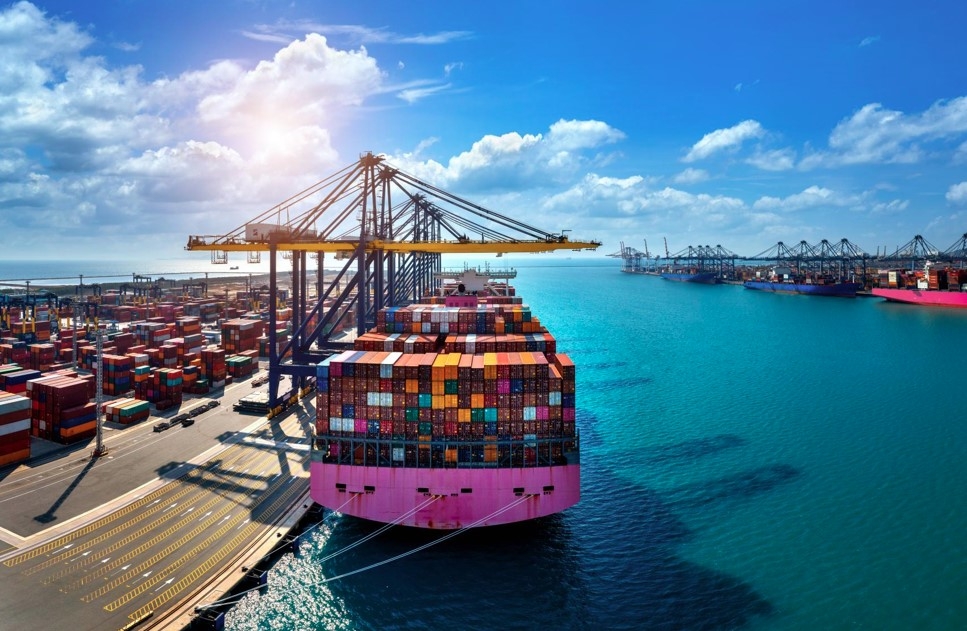
Supply chain management continues to be a top priority, with 97% of Vietnamese businesses identifying it as critical to their operations. Although supply chain disruptions have eased compared with previous years, businesses continue to face challenges stemming from geopolitical risks (40%), procurement complexity (34%) and regulatory ambiguity (88%).
To strengthen resilience, four in five businesses plan to expand their supplier networks in 2026. More than half intend to add suppliers within ASEAN, while 23% are looking to increase domestic sourcing.
Nearshoring strategies are also gaining traction. Around one-third of businesses plan to establish or expand manufacturing operations in Vietnam, while 43% are considering broader expansion across ASEAN, reinforcing the region’s role as a key manufacturing and supply chain hub.
The trend is also driving overseas investment. Seven in 10 Vietnamese businesses expanded internationally in 2025, and nine in 10 expect to pursue further expansion over the next three years. Meanwhile, 80% plan to invest abroad within the next two years, with average planned investments exceeding US$28 million.
ASEAN is the preferred destination, chosen by 65% of respondents, with Thailand, Singapore and Indonesia emerging as the most attractive markets.
However, businesses continue to face obstacles when expanding overseas, particularly in navigating legal, regulatory, compliance and tax requirements, identifying suitable local partners and accessing collaboration opportunities in foreign markets.

To support businesses in navigating regulatory and operational complexities and advancing their cross-border ambitions, UOB leverages its regional capabilities and 11 Foreign Direct Investment (FDI) Advisory Centres across Asia to facilitate cross-border investment, providing market access, regulatory guidance and local connectivity. The bank also supports complex regional supply chain management requirements, strengthened by the rollout of its Financial Supply Chain Management solutions on UOB Infinity in Vietnam, enabling end-to-end supply chains to be managed digitally on a single platform across multiple markets.
Annie Pham Nhu Anh, Head of Wholesale Banking, UOB Vietnam, said “Vietnamese businesses are demonstrating strong resilience and adaptability in an increasingly complex global environment. We are seeing a clear shift from recovery to transformation, with companies investing in digital capabilities, strengthening supply chains and expanding across ASEAN to capture long-term growth opportunities.
“As a leading ASEAN bank with deep local expertise and one of the region’s most extensive networks, UOB is uniquely positioned to support these ambitions. We remain committed to partnering with our clients at every stage of their journey, enabling them to navigate uncertainty, unlock cross-border opportunities and scale sustainably across the region”, Anh added.
Quynh Anh