

Vietnamese OCOP (One Commune, One Product) products are poised for significant international market penetration, driven by global trends in green and sustainable consumption and a strong emphasis on local identity. Beyond mere commodities, these products serve as "cultural ambassadors," disseminating Vietnamese cultural values and narratives of rural development on a global scale.
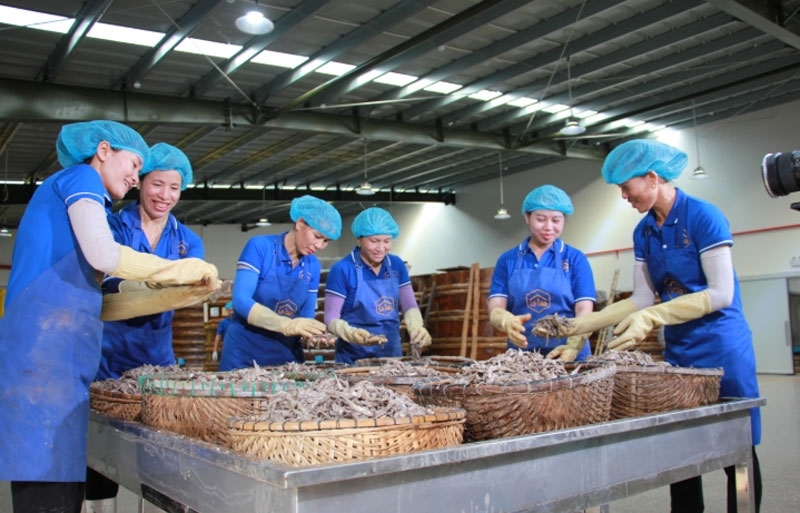 |
| Production process of fish sauce, a 5-star OCOP product of Thanh Hoa province-based Le Gia Food and Trading Service Co., Ltd. |
Many OCOP products have already established a presence in major domestic supermarkets and are progressively entering international markets. For instance, Le Gia, a national 5-star OCOP producer, successfully exports fish sauce and shrimp paste to various countries, underscoring the necessity of long-term investment in infrastructure and branding to meet international standards. Vietnam benefits from its rich biodiversity, diverse regional cultures, and traditional craft villages. By September 2025, the nation will boast nearly 17,400 OCOP products rated 3-stars or higher, including nearly 130 national 5-star products. Notably, over 60% of these 5-star products have successfully penetrated highly demanding international markets. A significant number of OCOP entities are shifting their focus from merely pursuing production volume to investing in quality improvement, process standardization, and developing compelling product narratives.
The primary challenge lies in ensuring the sustainable global reach of OCOP products. The majority of OCOP producers are cooperatives and small enterprises, often facing limitations in capital, human resources, digital skills, and a "produce-and-sell" market mindset, which results in a lack of value chain integration. Key bottlenecks include insufficient capabilities in market research, foreign language proficiency, negotiation, and logistics. The strategy must therefore prioritize building a sustainable brand image and product story, rather than chasing short-term revenue targets. Exporting in conjunction with tourism and e-commerce presents promising channels, requiring significant attention to quality assurance, efficient logistics, and intellectual property protection. The Ministry of Industry and Trade (MOIT) is committed to supporting export promotion, facilitating adherence to international standards, brand building, and e-commerce connectivity.
Despite numerous challenges, the journey to bring OCOP products to international markets also presents significant opportunities. By leveraging their unique identity, fostering innovation, and receiving comprehensive support, OCOP products are poised to substantially contribute to rural economic development and elevate Vietnam's image on the global stage.
Translated by Mai Huong