
Under Politburo Resolution No. 57 on science, technology, innovation and national digital transformation, AI has been identified as one of Vietnam's strategic technologies, creating fresh momentum for businesses to accelerate digital adoption and reshape the way they operate.
AI becomes part of everyday business operations
In recent years, AI has become increasingly integrated into business activities across a wide range of industries in Vietnam.
While early adoption was largely concentrated among major technology companies, manufacturers, banks, e-commerce platforms and service providers are now using AI to streamline operations and improve decision-making.
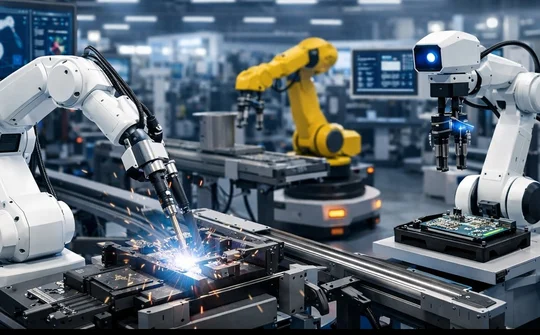
In manufacturing, AI helps monitor production lines, detect product defects, predict equipment failures and optimize workflows. Banks use AI to identify suspicious transactions, assess credit risks and enhance customer services through virtual assistants. E-commerce companies, meanwhile, rely on AI to analyze consumer behaviour, personalise customer experiences and forecast market demand.
Small and medium-sized enterprises (SMEs) are also beginning to embrace AI in areas such as content creation, customer service, data management and business administration. Tasks that previously required days to complete can now often be finished within hours, or even minutes.
Mai Viet Anh, product manager at FPT Smart Cloud, pointed out AI is fundamentally changing how businesses process information and prepare reports.
“In the past, producing a high-quality report required extensive training and manual verification of figures and formatting. With AI agents, users simply describe what they need, and the system automatically gathers information from multiple sources, completes the required templates and clearly identifies the origin of the data,” he shared.
According to Anh, large organisations process hundreds of thousands of reports every year using tens of thousands of different templates. AI can reduce processing time from several days to just a few minutes while improving accuracy and significantly lowering operating costs.
AI creates a new competitive advantage
Beyond improving operational efficiency, AI is enabling companies to make faster and more informed business decisions by processing and analysing vast amounts of data.
Kieu Tien Anh, chief operating officer of Vietnamese e-commerce platform F2C Hi1 Thuan Viet, agreed AI has become an important driver of business performance.
“In e-commerce, AI plays a key role in analysing consumer behaviour, personalising customer experiences and forecasting market demand. With its ability to process large volumes of data, businesses can develop more accurate strategies, optimise revenue and improve conversion rates,” he said.
According to industry experts, AI is rapidly evolving from a supporting technology into a core platform for business transformation, helping companies redesign management models, optimize value chains and enhance competitiveness in an increasingly digital economy.
Resolution 57 accelerates AI adoption

A major catalyst behind growing AI investment is the Politburo’s Resolution No. 57, which identifies science, technology, innovation and digital transformation as key drivers of Vietnam's future economic growth.
The resolution recognises AI as one of the country's priority strategic technologies while encouraging the development of an innovation ecosystem that strengthens collaboration among businesses, universities, research institutions and technology companies.
Nguyen Van Khoa, chief executive officer of FPT Corporation, emphasised Vietnam has an opportunity to move up the global technology value chain.
“Over the next five years, Vietnam has the potential to move beyond its traditional role as a manufacturing and IT services hub to become a co-creator and exporter of advanced technology solutions, particularly in artificial intelligence, generative AI and other frontier technologies,” he said.
According to Khoa, Vietnam already has an important policy foundation through Resolution 57, Resolution 68 (on private sector development) and the government's list of priority strategic technologies.
“The challenge now is no longer developing new strategies, but translating those strategies into concrete actions, products, markets and productivity gains,” he added.
SMEs still face barriers
Despite growing opportunities, many businesses, particularly SMEs outside major cities, continue to face challenges in adopting AI due to limited financial resources, digital infrastructure and skilled human capital.
Hoang Manh Ngoc, chairman of the Cao Bang Business Association, described Resolution 57 as a timely policy that encourages businesses to embrace innovation and improve competitiveness.
“For the resolution to deliver real impact, local authorities need to raise awareness among businesses while introducing practical support mechanisms that make new technologies more accessible. Only then can AI adoption spread more widely across the business community,” he argued.
He added that, alongside businesses' own efforts, further support is needed in workforce training, technology transfer, investment incentives and digital infrastructure to enable wider AI adoption.
AI expected to become a new growth engine
Artificial intelligence is no longer viewed as an emerging technology but is increasingly becoming an integral part of business operations in Vietnam.
From streamlining production and improving corporate governance to identifying new business opportunities, AI is reshaping how Vietnamese companies operate and compete.
Supported by Resolution 57 and growing momentum for digital transformation, AI is anticipated to become a key driver of productivity growth, innovation and business competitiveness, laying a stronger foundation for Vietnam's sustainable economic development in the digital era.
Minh Chau